
Real vs. Reel: The Cast of Dhurandhar (Part 2)
Uzair Baloch

Left (Reel): Played by Danish Pandor. The character is portrayed as the second-in-command to the Lyari gang leader, Rehman Dakait. Danish Pandor delivers an electrifying performance, capturing the unflinching, cold, and violent nature of the mobster. Critics praised his dialect training and ability to stand out in an ensemble cast with his menacing silence and sudden aggression.
Right (Real): Uzair Baloch (Real-life Lyari Gangster). He is a notorious gangster and head of the Peoples Amn Committee in Lyari, Karachi. Known for his extreme influence in the region, he has faced numerous charges involving murder, extortion, and espionage. He was a central figure in the Lyari gang wars and had alleged political connections that protected him for years.
Transformation Details: Danish Pandor underwent significant physical changes, sporting a rugged, unkempt look with a heavy beard to match Uzair's rough street-lord persona. He adopted a specific Lyari dialect to add authenticity.
Javed Khanani

Left (Reel): Played by Ankit Sagar. Portrayed as a key financial conduit for the underworld and terror networks. The character is slick, anxious, and operates in the shadows, managing the dirty money that funds the operations seen in the film.
Right (Real): Javed Khanani. He was one half of the massive money-laundering empire Khanani & Kalia. Based in Pakistan, his network was accused of laundering billions of dollars for criminals, politicians, and terror groups. He reportedly committed suicide in 2016 in Karachi, though circumstances remained controversial.
Transformation Details: The actor adopts a corporate but shady appearance, contrasting with the rugged gangsters. The look involves formal wear that appears slightly disheveled, symbolizing the stress of managing illicit high-stakes finance.
Headley

Left (Reel): Played by Carl Andrew Harte. The character appears as David Headley, the American terrorist who scouted targets for the 26/11 Mumbai attacks. The portrayal is chillingly calm and deceptive, showing him blending into Mumbai society while gathering intelligence for the handlers in Pakistan.
Right (Real): David Coleman Headley. An American terrorist of Pakistani origin who conspired with the Lashkar-e-Taiba (LeT) in plotting the 2008 Mumbai attacks. He visited India five times to conduct surveillance on the Taj Hotel, Oberoi Trident, and Nariman House. He is currently serving a 35-year sentence in a US prison.
Transformation Details: Carl Andrew Harte bears a strong resemblance to the real Headley, with the mismatched eyes (often created via lenses or makeup) and the clean-cut, Westernized tourist look that allowed the real Headley to evade suspicion.
Arshad Pappu

Left (Reel): Played by Ashwin Dhar. He plays Arshad Pappu, the rival gang leader to Rehman Dakait. The character is depicted as vicious and competitive, constantly vying for control over the drug and gun trade in Lyari. His on-screen rivalry with the protagonist's gang drives much of the local conflict.
Right (Real): Arshad Pappu. A notorious drug lord and leader of a rival gang in Lyari. He was the son of Haji Laloo and was involved in a bloody turf war with Rehman Dakait and later Uzair Baloch. He was brutally murdered in 2013, allegedly by members of Uzair Baloch’s gang.
Transformation Details: Ashwin Dhar adopts the look of a hardened street fighter, distinct from the more "political" style of his rivals. The transformation involves a darker complexion makeup and scars to suggest a history of violence.
Jaswant Singh

Left (Reel): Played by Akash Khurana (Character named Devavrat Kapoor). The character is the Minister of External Affairs during the timeline of the film (specifically the 1999 Kandahar hijack sequence). He is portrayed as a burdened statesman forced to make the difficult decision to release terrorists to save hostages.
Right (Real): Jaswant Singh. He was India's Minister of External Affairs during the hijacking of Indian Airlines Flight 814 in 1999. He personally escorted the three released terrorists to Kandahar in exchange for the passengers, a move that has been historically debated. He served as a Major in the Indian Army before joining politics.
Transformation Details: Akash Khurana captures the distinct, deep baritone voice and the safari suit attire that Jaswant Singh was famous for. The makeup includes greying hair and distinct glasses to mirror Singh's intellectual and somber demeanor.
As Dulat

Left (Reel): Played by Ali Raza Namdar (Character named K.S. Bhullar). Based on the R&AW chief during the critical years of the late 90s and early 2000s. The character is shown as a strategic pragmatist, advising the government during the crisis and handling the delicate negotiations with counterparts.
Right (Real): A.S. Dulat. Amarjit Singh Dulat was the chief of the Research and Analysis Wing (R&AW) from 1999 to 2000. He is known for his deep understanding of Kashmir and his role during the IC-814 hijack crisis. He later served as an advisor on Kashmir in the PMO.
Transformation Details: Ali Raza Namdar adopts the bureaucrat look—sharp suits, glasses, and a calm, composed body language that reflects a high-ranking intelligence officer who has seen it all.
Kamlesh Kumari

Left (Reel): Portrayed in the Parliament Attack Sequence. She is depicted as the brave female CRPF constable who first spots the terrorists entering the Parliament complex. In a tense sequence, she raises the alarm, screaming to alert her colleagues before being gunned down, effectively saving many lives.
Right (Real): Kamlesh Kumari. A constable with the CRPF (Central Reserve Police Force). On December 13, 2001, she was posted at Iron Gate No. 1 of the Parliament House. She spotted the terrorists' car and ran towards it shouting an alarm, despite being unarmed. She was shot 11 times and died on the spot. She was posthumously awarded the Ashok Chakra, India's highest peacetime gallantry award.
Transformation Details: The actor playing her wears the standard khaki CRPF uniform of that era. The scene focuses less on physical likeness and more on the recreation of her specific heroic action at the gate.
Omar Hamid

Left (Reel): Played by Aditya Uppal (Character named ASP Omar Haider Datta). He plays a courageous police officer in the Lyari Task Force who works alongside SP Chaudhary Aslam. The character is an educated, articulate officer trying to bring order to the chaos of Karachi, often serving as the narrator or the moral compass in the police force.
Right (Real): Omar Shahid Hamid. A former SSP in the Pakistan Police and son of the assassinated KESC managing director Shahid Hamid. He served in the CID and worked closely with Chaudhry Aslam Khan. After surviving threats from the Taliban and gangs, he took a sabbatical to become a famous crime novelist (author of The Prisoner).
Transformation Details: Aditya Uppal sports a clean-shaven, sharp police uniform look, contrasting with the rougher, older style of Sanjay Dutt’s Chaudhary Aslam. He portrays the "modern" face of the department.
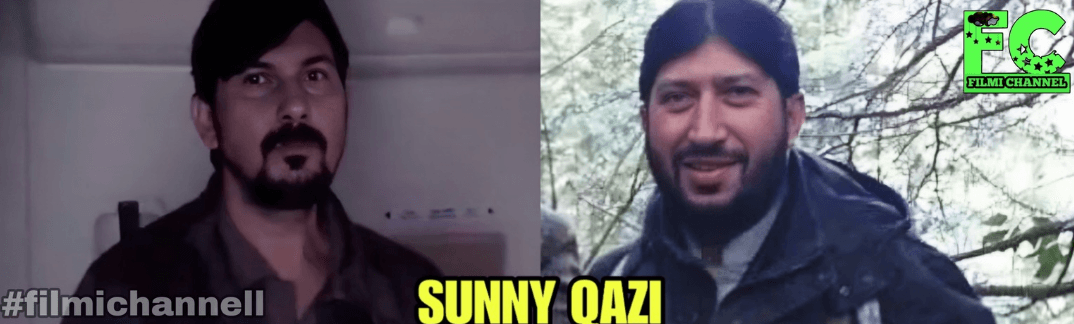
Sunny Qazi

Left (Reel): Featured as a gang member. He is depicted as one of the loyal lieutenants in the Lyari gang, involved in the street-level enforcement and extortion activities shown in the movie's Karachi segments.
Right (Real): Sunny Qazi. A known gangster associated with the Lyari gang wars. He was a close aide to the leadership (Rehman Dakait and Uzair Baloch) and was involved in various criminal activities in the Lyari neighborhood.
Transformation Details: The character is styled with the typical "Lyari look"—shabby street clothes, bandanas or local caps, and heavy weaponry, blending into the crowd of gang members.
Bhuttvi & Chemma

Left (Reel): Played by Sanjay Mehta (Abdul Bhuttovi) & Vinod Tharani (Azam Cheema). These characters represent the terror masterminds operating from the safe houses. They are shown planning the logistics of attacks (like 26/11) and indoctrinating recruits. They appear cold, calculated, and deeply radicalized.
Right (Real): Abdul Salam Bhuttavi & Azam Cheema.
- Abdul Salam Bhuttavi: A founding member of Lashkar-e-Taiba (LeT) and deputy to Hafiz Saeed. He served as the acting head of LeT when Saeed was detained.
- Azam Cheema: The LeT's commander for operations in India and a key conspirator in the 2006 Mumbai train bombings and the 26/11 attacks. He was known as a master trainer for insurgents.
Transformation Details: Both actors are given the "cleric" look—traditional shalwar kameez, skull caps, and henna-dyed (orange) beards for Bhuttvi, capturing the specific visual identity of the LeT leadership.
Sajid Mir

Left (Reel): Played by Faiz Khan. The character is the "Project Manager" of the Mumbai attacks. He is seen in the control room scenes, directing the terrorists over the phone with chilling precision. The acting emphasizes his detached cruelty as he orders executions in real-time.
Right (Real): Sajid Mir. A senior commander of the LeT and the chief planner of the 2008 Mumbai attacks. He was the "voice" heard on the intercepts guiding the terrorists at the Chabad House and Taj Hotel. For years, he was a ghost, with very few photos available, until his recent sentencing in Pakistan.
Transformation Details: Faiz Khan is styled to look nondescript yet menacing, often shown with phone equipment. The transformation relies heavily on voice acting to match the intercepted audio recordings of the real Sajid Mir.
Nabil Gabol

Left (Reel): Played by Rakesh Bedi (Character named Jameel Jamali). He plays a senior politician from the Pakistan Awami Party who has deep ties to the Lyari gangs. The character acts as the political patron for the gangsters, using them for muscle while maintaining a facade of respectability.
Right (Real): Nabil Gabol. A prominent Pakistani politician who has been a Member of the National Assembly. He has historically represented the Lyari constituency and has had a complex, often controversial relationship with the Lyari gangs and the Peoples Amn Committee.
Transformation Details: Rakesh Bedi, known for comic roles, transforms into a serious, manipulative politician. He wears crisp white kurtas and waistcoats (typical of Pakistani politicians) and adopts a heavy, authoritative persona, shedding his usual jovial image.